
Best Sustainable Alternatives to Plastic Kitchen Utensils
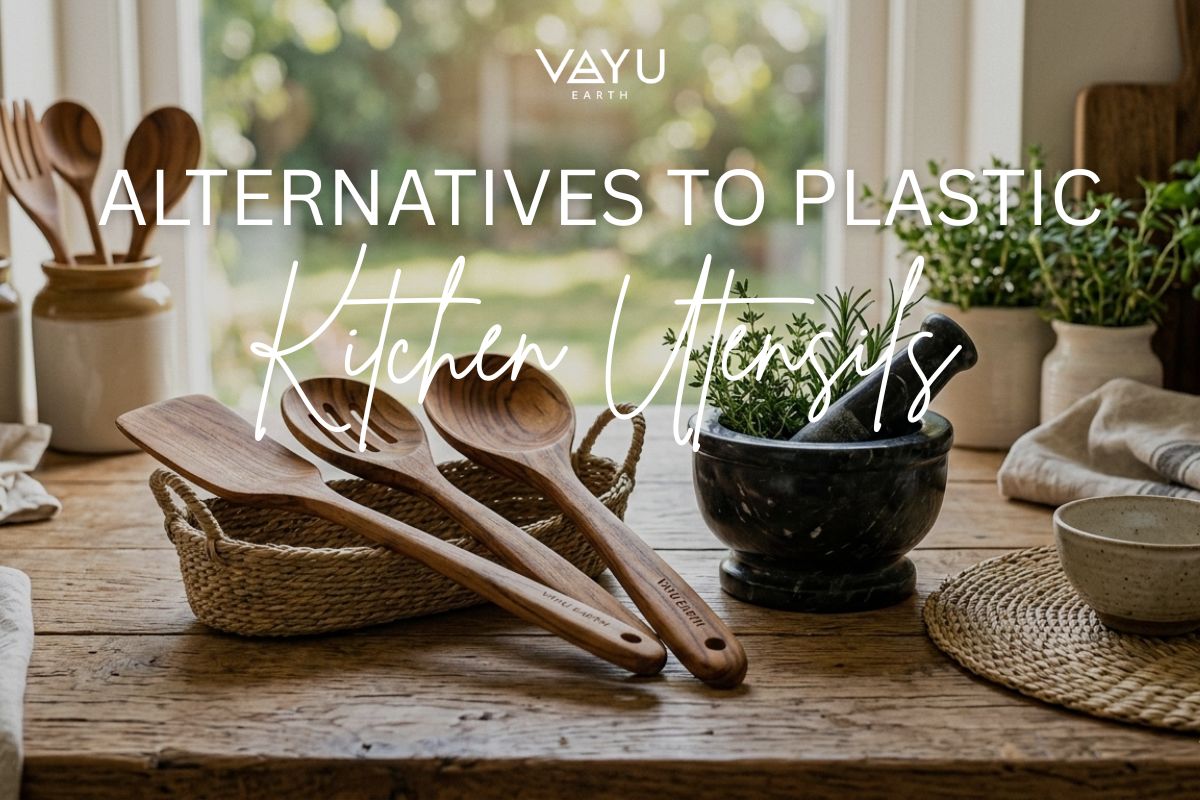
If you’ve ever watched a plastic spatula melt against the side of a hot pan, you’ll know the feeling: there must be a better way. More and more households across the UK are now searching for alternatives to plastic kitchen utensils, not just for durability, but for health, sustainability and a calmer, more natural kitchen aesthetic.
At Vayu Earth, we believe the kitchen is the heart of the home. And the tools you use every day should feel good in your hands, look beautiful on your countertop, and tread lightly on the planet. So let’s explore the best sustainable kitchen utensils to replace plastic for good.
Why Move Away from Plastic Kitchen Utensils?
Plastic utensils are cheap and widely available, but they come with drawbacks:
They can warp or melt at high temperatures
They may release microplastics over time
They are typically made from fossil fuels
They rarely biodegrade at the end of their life

Switching to alternatives to plastic kitchen utensils isn’t about perfection, it’s about small, conscious changes that add up over time.
Wooden Kitchen Utensils – A Timeless Sustainable Choice
When people think of sustainable kitchen utensils, the first option that comes to mind is usually wooden kitchen utensils, and for good reason.
Wood has been used in kitchens for centuries. It’s natural, renewable, biodegradable, and incredibly durable when properly cared for.

Why Choose Wooden Kitchen Utensils?
Naturally heat-resistant
Gentle on non-stick cookware
Long-lasting with simple care
Completely plastic-free
Compostable at end of life
Unlike plastic, wood doesn’t leach chemicals when exposed to heat. It also brings warmth and texture into your kitchen — something plastic simply cannot offer.
Comparison: Plastic vs. Artisanal Alternatives
| Feature | Plastic Utensils | Sustainable Alternatives (Teak/Bamboo) |
| Durability | High risk of melting/cracking | Lasts for decades with care |
| Health | Potential chemical leaching | Natural and non-toxic |
| Aesthetics | Generic/Mass-produced | Unique, artisanal, and warm |
| End of Life | Stays in landfill for 400+ years | Biodegradable or recyclable |

How to Make the Transition
You don’t need to throw away every plastic item in your kitchen today. The most sustainable way to transition is through Slow Decorating:
Audit your most-used tools: Replace your most used plastic spatula or serving spoon first.
Choose Quality over Quantity: One hand-carved Teak spoon is worth more than a set of ten plastic ones.
Care for your tools: A simple rub of food-safe oil on your wooden utensils once a month will keep them looking new for years.
Here are some sustainable kitchen utensils you could looking for:
1. The Everyday Essential: The Wood Spoon
A wood spoon is one of the most versatile and beloved tools in any kitchen. From stirring soups to folding cake batter, it handles almost everything with ease.

Benefits of a Wood Spoon
Strong and sturdy
Won’t scratch pots and pans
Doesn’t conduct heat (no burnt fingers)
Develops character over time
There’s something grounding about using a wooden spoon — especially one that has been handcrafted. Each spoon has its own grain pattern and story, making it far more special than a mass-produced plastic version.

At Vayu Earth, we love how a simple wood spoon can turn everyday cooking into a mindful ritual.
2. The Must-Have for Soups & Stews: The Wood Ladle
If you enjoy hearty soups, stews or curries, a wood ladle is an essential sustainable swap.
Plastic ladles can bend or weaken in hot liquids, while a well-crafted wooden ladle remains solid and dependable.

Why a Wood Ladle Works Better
Perfect for high temperatures
Strong enough for thick soups
Comfortable grip
Naturally beautiful for serving at the table
A wood ladle doesn’t just function well — it also looks elegant when left resting beside a ceramic pot. It’s the kind of piece you won’t want to hide away in a drawer.
3. Other Eco-friendly Kitchen Utensils You Can Get From Vayu Earth
Tong

Honey Dipper

Set of 2 Spoons

How to Care for Wooden Kitchen Utensils
Choosing alternatives to plastic kitchen utensils, like wooden kitchen utensils, is a long-term investment, and with the right care, a wood spoon or wooden ladle can last for many years.
Always hand-wash your wooden utensils using warm water and mild washing-up liquid. Avoid the dishwasher, as high heat and prolonged moisture can cause cracking or warping. After washing, dry them immediately with a tea towel and allow them to air dry fully before storing. Never leave them soaking in water, as this weakens the wood fibres over time.

To keep the wood smooth and nourished, apply a food-safe oil (such as mineral oil or linseed oil) every few weeks or whenever the surface looks dry. Simply rub a small amount in with a cloth, leave it overnight, and wipe away any excess before use.
Stored in a dry, well-ventilated space, sustainable kitchen utensils made from wood will remain strong, safe and naturally beautiful, far longer than most plastic alternatives.
Creating a More Natural Kitchen with Vayu Earth
At Vayu Earth, sustainability is a commitment. We carefully select handcrafted, natural materials that celebrate both craftsmanship and environmental responsibility.
Whether it’s a beautifully carved wood spoon or a sturdy wood ladle, these pieces are designed to be used daily, loved deeply, and kept for years.

Replacing plastic doesn’t have to happen overnight. Start with one drawer. One utensil. One thoughtful choice.
Over time, your kitchen will begin to reflect your values: warm, intentional and sustainable.