
Why Cheap Home Decor Ends Up Costing You More (The True Price of Fast Homeware)
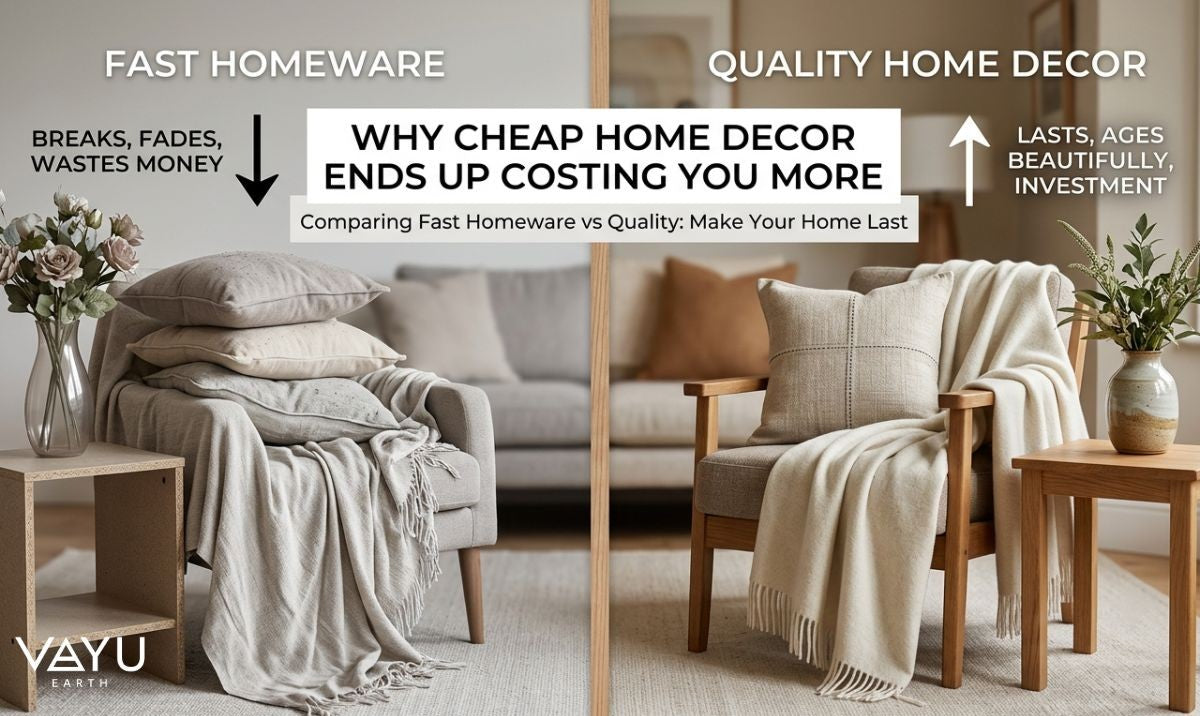
We’ve all been there. You spot a trendy cushion, a sleek ceramic vase, or a cosy throw blanket at a bargain price in a high-street shop. It looks brilliant on the shelf, fits the budget, and gives your living room an instant weekend refresh.
Fast forward six months:
The cushion cover has lost its shape, the seams on the throw are unravelling, the vibrant dyes have faded after a single wash, and that bargain vase suddenly feels like cheap clutter.

This endless cycle is the hidden trap of fast homeware. While low price tags feel like a proper win at the till, buying cheap home decor almost always costs you more in the long run, not just in hard-earned money, but in daily frustration, wasted time, and environmental harm.
Here is why fast homeware fails, the true cost of "disposable" interior styling, and how to spot genuine quality that stands the test of time.
The Hidden Costs of Fast Homeware
1. The "Replacement Tax"
When a £15 polyester throw blanket loses its softness and bobbles after three cycles in the washing machine, you end up buying another one. Then another. Over three years, you’ve quietly spent £45 to £60 replacing the exact same item.

In contrast, investing in a high-quality, handwoven wool or organic cotton throw might cost £50 to £60 upfront, but it stays soft, structured, and beautiful for a decade. Fast homeware creates a subtle "replacement tax" that drains your wallet over time.
Fast Homeware Cycle:  £15 (Year 1) + £15 (Year 2) + £15 (Year 3) = £45+ (Faded & In the Bin)
Quality Investment:   £50 Upfront = 10+ Years of Use (Ages Gracefully)
2. Low-Grade Materials and Synthetic Blends
Mass-produced, cheap home accessories rely heavily on synthetic fabrics, thin veneers, and chemical glues designed to look good under bright showroom lighting, not in a lived-in home.
-
Polyester & Acrylic: These synthetic fabrics trap dust, pill easily (forming ugly little bobbles), and shed microplastics into your home and water supply.
-
Flimsy Dyes: Cheap synthetic dyes fade rapidly when exposed to everyday British sunlight through your windows.
-
Low-Density Foam & Weak Stitching: Cushion inserts flatten in weeks, while single-stitched seams pop under normal daily use.
3. The "Clutter Effect" in Your Living Space
Because budget homeware wears out so quickly, it loses its charm fast. Instead of feeling intentional and relaxing, your living room starts to feel mismatched and cluttered. True luxury in home styling isn't about having more things; it’s about surrounding yourself with pieces that age gracefully alongside you.
How to Buy Home Decor That Truly Lasts
Stepping away from fast homeware doesn't mean you need to spend a fortune. It’s simply about knowing what details to inspect before you tap your card.

1. Choose Natural Fibres Over Synthetics
Natural materials age with character; synthetic materials just degrade. When shopping for soft furnishings, check the fabric label for:
-
Organic Linen & Cotton: Highly breathable, naturally durable, and gets noticeably softer with every wash.
-
Pure Wool: Naturally dirt-resistant, flame-retardant, and holds its structure for years without sagging.
-
Jute, Hemp & Seagrass: Exceptionally tough natural fibres ideal for woven rugs, storage baskets, and textured accents.
Pro Tip: If an item is predominantly polyester, acrylic, or nylon, expect it to bobble, flatten, or fray significantly faster.

2. Inspect the Craftsmanship
Before buying any soft furnishing or home accessory, take a moment to look at the build quality:
-
Check the Seams: Look for tight, double-stitched or bound seams rather than loose, single-line threads.
-
Assess the Fabric Weight: High-quality textiles have a reassuring, natural weight. A flimsy, weightless throw or cushion cover is a dead giveaway for low-density material.
-
Examine Zippers & Closures: Look for sturdy, concealed metal or heavy-duty zips on cushions rather than cheap plastic ones that catch easily.

3. Favour Artisan Craftsmanship Over Factory Lines
Handcrafted homeware naturally outlasts mass-produced items because it is created using traditional techniques refined over generations. Handwoven textiles, hand-carved sustainable woods, and hand-thrown ceramics carry a level of structural integrity that high-speed factory assembly lines simply cannot match.
The 3-Question Test Before You Buy
Next time you’re tempted by a cheap impulse buy on the high street, ask yourself these three quick questions:
-
"Will this look better or worse in two years?" (Natural materials like solid wood, brass, and linen develop a rich patina over time. Synthetics just scratch and fade.)
-
"Can I clean or repair this easily?" (If it can't survive a gentle hand-wash or spot clean, it’s not built for real daily living.)
-
"Does this add genuine warmth to my space, or am I just chasing a fleeting trend?"

Invest in Your Home: Buy Less, Choose Well
Your home should be a sanctuary, not a revolving door of cheap, trend-chasing homeware. By choosing thoughtfully crafted, natural pieces from Vayu Earth, you stop throwing money away on constant replacements. Invest in quality that withstands daily life, and start building a space that feels warm, intentional, and timeless.





)