
How to Style Table Runners and Placemats: Eco-Friendly Dining Ideas
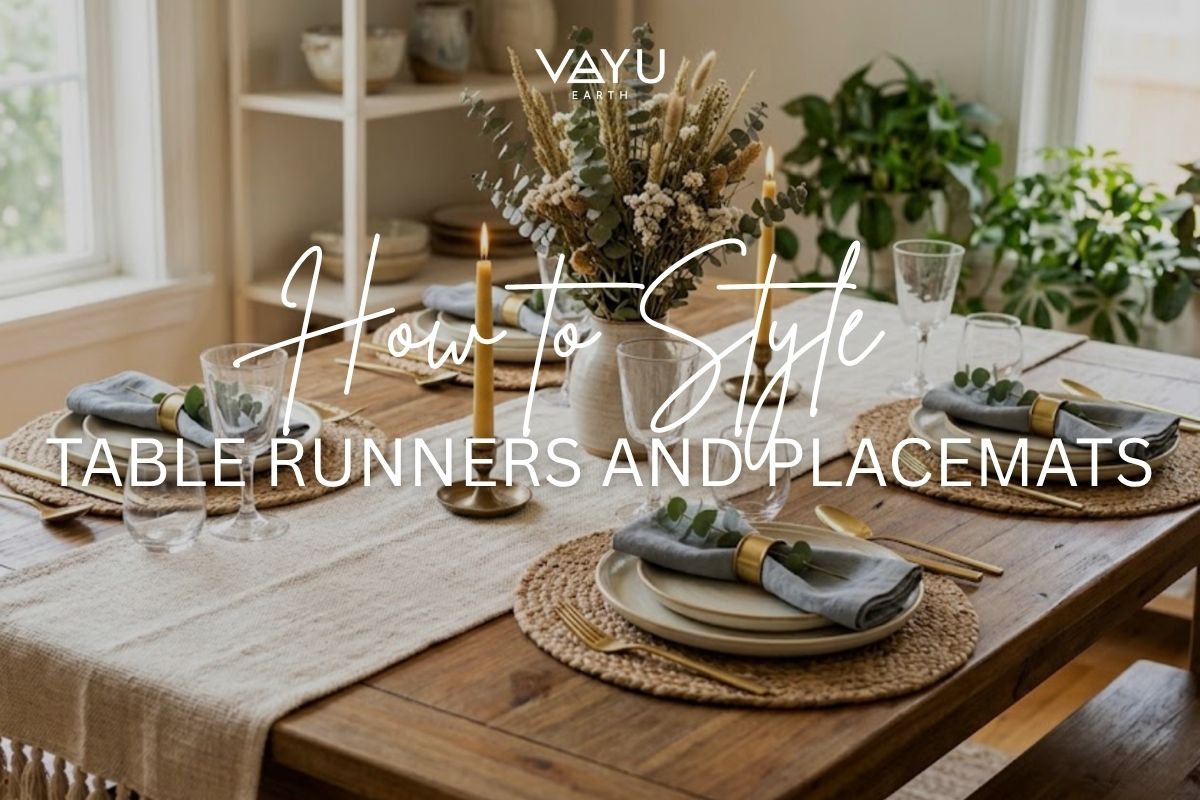
A well-styled dining table creates an inviting anchor for shared meals, seasonal gatherings, and daily routines. Combining handwoven placemats with a sustainable table runner offers the ideal balance of texture, protection, and aesthetic appeal.
At Vayu Earth, our home decor collections celebrate artisanal craftsmanship and renewable, plant-based materials. Whether you are hosting an intimate dinner party or enjoying a quiet morning coffee, this guide breaks down how to style, choose, and maintain eco-friendly table runners and placemats for your home.

Table Runner and Placemat Combinations Ideas
Featured Tip: When pairing a runner with placemats, ensure the runner is 12 to 24 inches longer than your table so it hangs evenly at both ends. Place your mats so they frame each setting without overlapping the center runner.
| Occasion | Table Runner Type | Placemat Material | Styling Focus |
|---|---|---|---|
| Everyday Casual | Neutral Handwoven Cotton | Braided Jute or Sabai Grass | Earthy textures, rustic durability, minimal fuss |
| Weekend Dinners | Boho Macramé / Patterned | Round Concentric Weave | Layered depth, ambient candles, botanical accents |
| Modern Minimalist | Tonal Off-White Linen | Neutral Woven Cotton | Clean lines, single-tone ceramics, refined simplicity |

How To Choose The Materials: Jute vs. Cotton vs. Sabai Grass
Choosing the right material for your artisanal dining linens depends on your daily routines, aesthetic preferences, and practical needs.
| Material | Look & Feel | Best Used For | Durability & Water Resistance |
|---|---|---|---|
| Jute | Thick, rustic, golden-brown texture with a natural sheen | Daily placemats, heat-resistant trivets, textured runners | Highly durable and thick; low moisture resistance |
| Cotton | Soft, smooth, highly flexible weave available in varied patterns | Table runners, everyday napkins, washable placemats | Flexible and machine-friendly; low heat insulation on thin weaves |
| Sabai Grass | Firm, lightweight, fine-woven finish with organic earthy tones | Decorative placemats, structured chargers, centerpiece mats | Exceptionally sturdy and shape-retaining; moderate water resistance |

3 Easy Ways to Style Handwoven Table Linens
1. The Everyday Look: Natural Jute and Soft Cotton
For daily meals, focus on durable, low-maintenance materials that protect your tabletop while adding warmth.

-
Base: Place round jute placemats directly onto a wooden or glass surface to cushion tableware.
-
Centerpiece: Lay a slim cotton table runner straight down the middle.
-
Accent: Keep the center simple with a handcrafted ceramic fruit bowl or a vase of dried flowers.
2. The Entertaining Look: Layered Textures and Bohemian Accent
When hosting guests, mixing distinct weaves creates visual interest across the entire table.
-
Layering: Use a structured boho macramé runner as your central focal point.
-
Place Settings: Frame each plate using Sabai grass placemats. The fine, tight weave of natural grass contrasts beautifully against cotton macramé knotting.
-
Finishing Touches: Add low pillar candles and freshly cut greenery down the length of the runner.

3. The Minimalist Look: Tonal Simplicity
If your home decor leans toward contemporary design, a monochromatic approach works best.
-
Choose an off-white or oat-colored cotton runner paired with matching woven placemats.
-
Keep ceramics uniform in shape and texture.
-
Allow the subtle texture of the handwoven fabric to take center stage.

Care & Maintenance: How to Clean Natural Fiber Decor
Proper care extends the lifespan of your handwoven table decor while keeping natural fibers looking vibrant.
How to Clean Jute & Sabai Grass Placemats
-
Daily Cleaning: Shake out crumbs or use a soft-bristle brush to remove dry dust.
-
Spot Cleaning: Dampen a clean cloth with cold water and mild soap. Gently dab stains—do not rub vigorously.
-
Drying: Air dry flat in a shaded, well-ventilated area. Avoid direct heat or prolonged exposure to strong sunlight to prevent color fading or warping.
-
Water Exposure: Do not submerge grass or jute mats in water or place them in a dishwasher.
How to Clean Handwoven Cotton Table Runners
-
Washing: Hand wash or use a gentle machine cycle in cold water with a mild detergent.
-
Drying: Lay flat or line dry. Avoid tumble drying on high heat to prevent shrinkage or fraying of delicate fringe details.
-
Ironing: Iron on low-to-medium heat while the fabric is slightly damp to smooth out creases.

Frequently Asked Questions
1. Should placemats match the table runner?
No, placemats do not need to match your table runner exactly. Mixing complementary materials, such as pairing a smooth cotton runner with structured jute placemats, adds texture and visual depth to your dining setup.
2. How far should a table runner hang down?
An ideal table runner should hang roughly 6 to 12 inches (15 to 30 cm) over each end of the table. It should never drop lower than your dining chair seats.
3. Can I use jute or Sabai grass placemats outdoors?
Yes, both materials work well for outdoor dining in dry weather. However, store them indoors after use, as excess humidity or rain can degrade natural plant fibers over time.
Explore Sustainable Home Decor at Vayu Earth
Refresh your dining space with natural textures. Browse our collection of handwoven table runners, artisanal placemats, and eco-friendly table decor at Vayu Earth to bring timeless craftsmanship into your home.